
11%
10%

Add a Stunning Octagonal Greenhouse to your Garden
An octagonal greenhouse offers something that a standard rectangular structure simply cannot: a striking architectural centrepiece that captures light from every direction. With eight angled sides, this distinctive design has roots stretching back to Victorian botanic gardens, where octagonal glasshouses displayed exotic plants beneath soaring central turrets.
Today, UK gardeners are rediscovering these elegant structures for both practical growing and as beautiful garden features. Whether you’re nurturing tomatoes, overwintering tender perennials, or simply want a unique spot to sit with a morning coffee, an octagonal greenhouse delivers on multiple fronts.
Key Takeaways
- An octagonal greenhouse is an 8-sided freestanding structure (typically 6ft 6” to 9ft across) that provides more even light distribution than rectangular alternatives, making it ideal for UK gardens with low winter sun.
- Shedsdirect.co.uk compares octagonal greenhouses from leading UK manufacturers, including Western Red Cedar, aluminium, and hybrid frame options with horticultural glass or toughened safety glass glazing.
- Construction choices matter: wooden greenhouses retain heat better than all-glass designs, while powder coated aluminium frames offer low maintenance in wet UK climates.
- Budget realistically from around £1,500 for smaller aluminium models up to £4,000–£4,500+ for large cedar octagonal greenhouses with professional installation.
- Practical considerations include firm foundations (concrete or paving slabs work well), at least 18” access space around the perimeter, adequate ventilation through roof vents, and guttering for rainwater harvesting.
What Is an Octagonal Greenhouse?
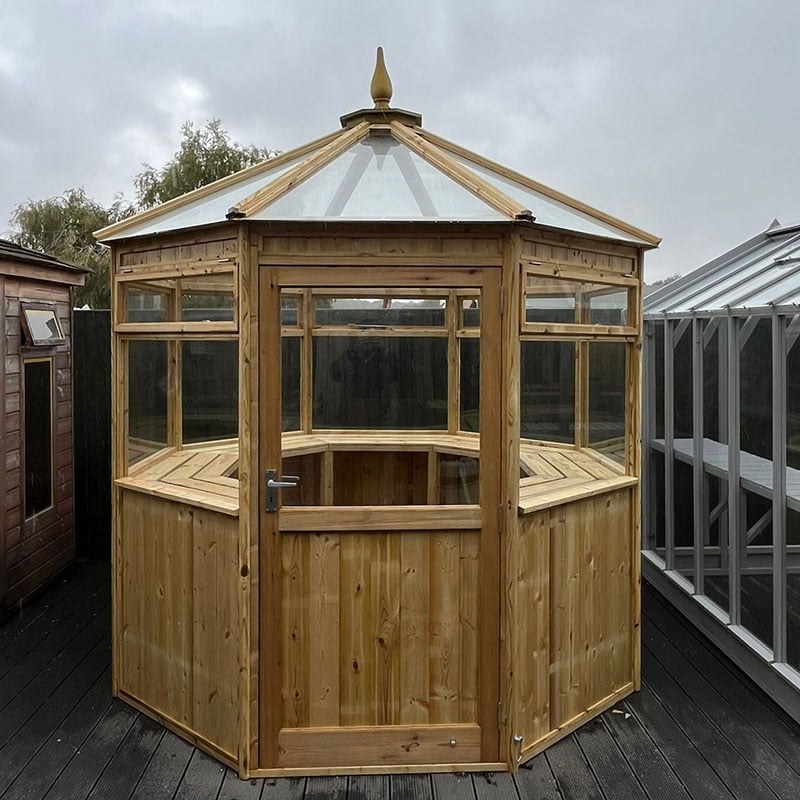
An octagonal greenhouse is an 8-sided freestanding greenhouse, usually measuring between about 6ft 6” and 9ft across, designed both for productive growing and as an eye-catching garden feature. The geometry creates a pavilion-like interior that feels remarkably spacious despite a compact footprint.
The 360-degree aspect and angled glazing panels capture sunlight from multiple directions throughout the day. This is particularly valuable in the UK, where low winter sun can leave rectangular greenhouses with shadowed corners. With an octagonal design, light reaches plants more evenly, reducing the need for constantly rotating pots and promoting uniform growth.
Many UK buyers treat octagonal greenhouses as dual-purpose buildings. Part productive growing space, part informal garden room—it’s not unusual to find a bistro set alongside the staging, creating a quiet retreat that doubles as a propagation hub. The glazing material typically allows excellent views out to the garden while protecting plants inside.
Shedsdirect.co.uk is a comparison website rather than a manufacturer. This means you can browse octagonal models from different UK brands in one place, comparing frame materials, glazing options, sizes, and prices without visiting multiple sites.
Why Choose an Octagonal Greenhouse for Your UK Garden?
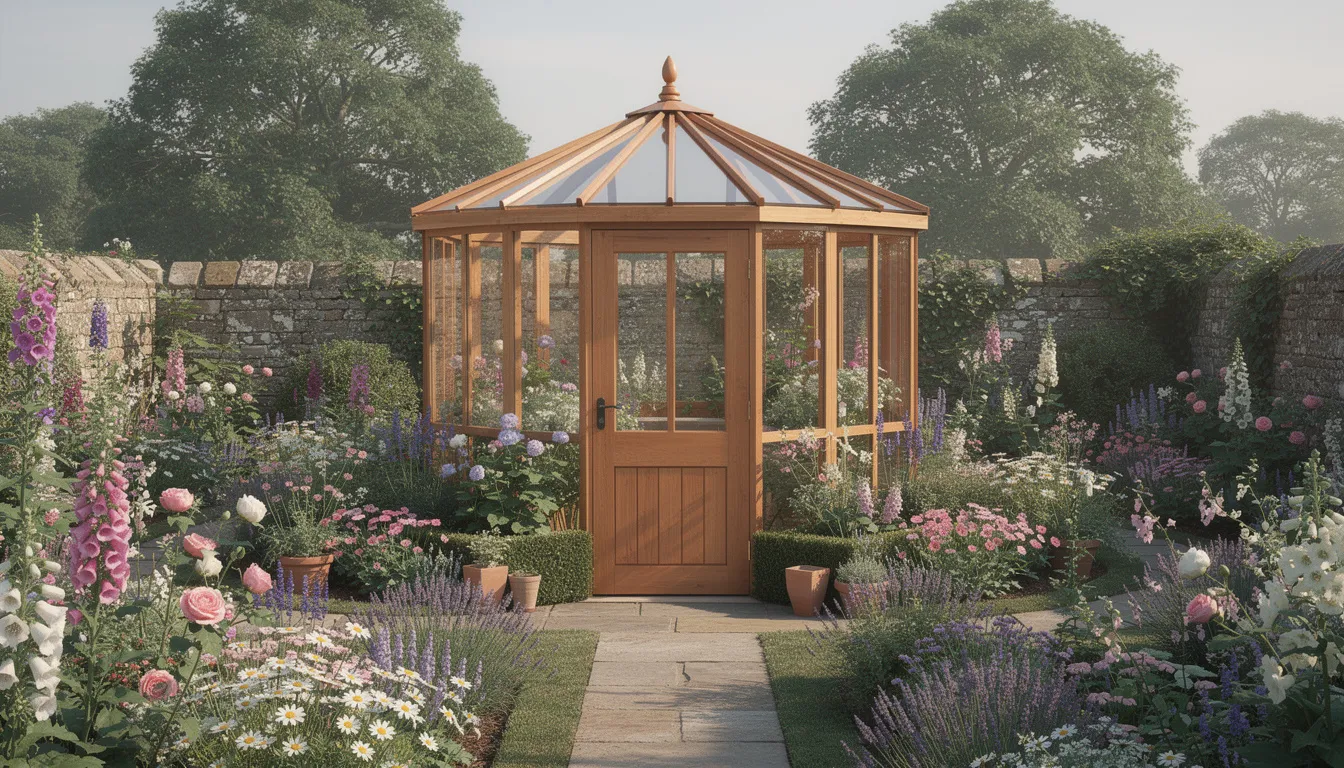
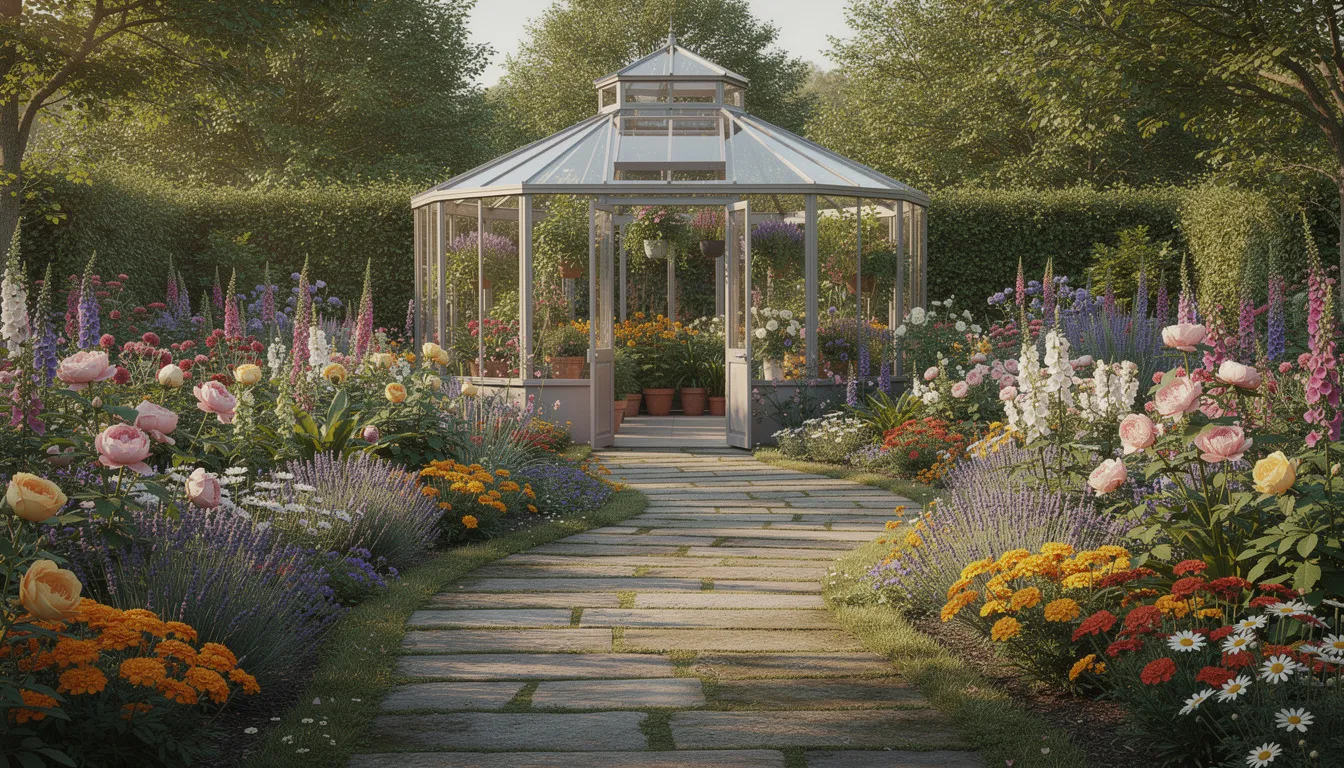
Octagonal greenhouses make exceptional focal points. Positioned at the centre of a formal lawn, at the end of a garden path, or nestled into a cottage garden border, they draw the eye and anchor the entire garden design in a way that a rectangular shed or greenhouse rarely achieves.
Beyond aesthetics, the practical benefits are substantial:
- More consistent light distribution – plants on all sides receive direct sunlight at some point during the day
- Improved air movement – the faceted shape encourages natural circulation, helping to prevent fungal diseases
- Flexible growing zones – group sun-loving tomatoes and chillies on south-facing bays while shade-tolerant ferns occupy northern aspects
- Efficient use of space – the octagonal footprint delivers approximately 20% more usable internal area compared to an equivalent square perimeter
Compact footprints (such as 6ft 6” x 6ft 6”) suit smaller UK gardens beautifully. The angled walls create an interior that feels open and airy, even when staging is fitted around multiple bays. You’ll have room for seed trays, established plants, and perhaps a small chair without feeling cramped.
Versatility is another strong point. These structures handle everything from starting seedlings in spring, to growing cucumbers and peppers through summer, to overwintering tender perennials before the first frosts. Some owners use them year-round as quiet seating areas, particularly when combined with decorative flooring and a small electric heater.
Octagonal designs pair well with other garden buildings from Shedsdirect.co.uk. Consider matching your greenhouse with sheds, pergolas, or gazebos for a coordinated garden layout that feels intentional rather than piecemeal.
Frame Materials: Cedar, Aluminium and Hybrid Designs
Most quality octagonal greenhouses available in the UK fall into three categories: timber (typically Western Red Cedar), aluminium, or a hybrid combining both materials.
The best position for a freestanding greenhouse is a sunny spot outside the shadow of nearby buildings and trees.
Automatic openers react to heat to ensure that vents open in hot weather and close when it cools down.
Western Red Cedar Frames
Cedar remains the traditional choice for premium octagonal greenhouses. The timber is naturally durable and insect-resistant thanks to high thujaplicin content, which discourages pests and rot without chemical treatment. Better manufacturers use mortice and tenon joinery for structural strength, sometimes applying a factory-applied clear preservative.
Left untreated, Western Red Cedar weathers gracefully to a soft silver-grey patina. Many owners prefer this natural ageing, though you can maintain the original reddish-brown colour with periodic oiling or staining. Wooden greenhouses retain heat better than fully glazed designs, creating a slightly warmer environment that suits shade-loving ferns and extends the growing season into autumn.
Cedar cladding panels can also be incorporated into some bays to provide additional insulation and privacy.
Aluminium Frames
Powder coated aluminium greenhouses offer a lower-maintenance alternative. Available in colours such as green, grey, anthracite, or black, these frames resist corrosion and require little more than occasional cleaning. The powder coated finish protects against the wet UK climate, making aluminium particularly suitable for exposed or coastal locations.
Powder coated aluminium frames work well for base plinths, sills, and door thresholds—areas in constant contact with moisture where timber might eventually suffer. Metal greenhouses generally cost less than cedar equivalents and suit gardeners who prioritise convenience over the warmth of natural materials.
Hybrid Cedar-Aluminium Designs
Premium 9×9 models often combine the best of both worlds. Aluminium handles high-wear and moisture-prone areas (cappings, thresholds, capping strips), while cedar forms the main internal frame, delivering that warm, natural interior appearance.
These hybrid constructions balance durability with aesthetics. Aluminium capping protects exposed timber edges from weather damage, extending the structure’s lifespan while preserving the traditional greenhouse character.
What to Look For
When comparing frames, check for:
- Heavy-duty sections rather than flimsy angles
- Rounded edges on timber to reduce splinter risk
- Securely fixed ridge assemblies for wind resistance
- Cedar capping or aluminium capping to protect exposed joints
- Quality hinged door hardware and low thresholds
Glazing Options: Horticultural vs Toughened Glass
Octagonal greenhouses typically ship with either standard 3mm horticultural glass or toughened safety glass. Some smaller budget models use polycarbonate greenhouses panels as a practical and affordable alternative.
Horticultural Glass
Standard 3mm horticultural glass remains the most affordable glazing option. It provides excellent light transmission (around 85-90%) and performs well for most growing applications. However, normal glass breaks into sharp shards if damaged, making it less suitable for families with young children or pets.
Greenhouse glass in horticultural grade may include minor blemishes or “seeds” (tiny bubbles) within accepted manufacturing standards. These don’t affect performance or light levels.
Toughened Safety Glass
Toughened glass panes are approximately six times stronger than standard glass. The additional weight improves wind resistance, anchoring the structure more firmly in exposed positions. If toughened glass breaks, it crumbles into small, relatively blunt granules rather than dangerous shards—an important safety consideration.
Premium octagonal greenhouses often feature full-length toughened glass panes secured with bar capping rather than multiple small panes with overlapping glass clips. This creates a cleaner appearance with fewer dirt traps and joints to maintain. Overlapping glass can collect debris and algae over time, so the cleaner lines of full-pane glazing appeal to many buyers.
It’s worth understanding that when break toughened glass breaks, the entire pane shatters rather than cracking. Replacement is straightforward but requires a complete new panel. Unsightly glass damage from impacts is less likely with toughened glazing due to its greater strength.
Polycarbonate Glazing
Polycarbonate greenhouses retain heat reasonably well and resist impact better than glass. The material is lighter, making DIY self assembly easier, though it offers slightly lower light transmission and can yellow over time with UV exposure. For budget-conscious buyers or those prioritising safety above all else, polycarbonate provides a sensible middle ground.
The best glazing material for your situation depends on budget, safety requirements, and whether maximum light transmission matters for your intended crops.
Design Features of a Quality Octagonal Greenhouse
Typical UK octagonal greenhouses range from about 2.0 to 2.7 metres in diameter, with wall heights designed to accommodate staging and taller plants. Many models feature decorative roof finials that echo the Victorian glasshouse heritage.
Doors and Access
Entry options include single or double doors depending on the model size. Double doors simplify access with wheelbarrows, larger pots, and staging components. Look for:
- Low or level thresholds for barrow and wheelchair access
- Quality locks and handles in matching finishes
- A hinged door rather than sliding designs (more common on octagonal structures)
- Door orientation that works with your garden paths and prevailing wind direction
Guttering and Rainwater Collection
Integrated guttering around the roof perimeter channels rainwater to one or more downpipes. This allows connection to a water butt for rainwater harvesting—particularly popular in UK gardens where hosepipe bans occasionally apply during dry summers. A gravity fed irrigation system or hose fed irrigation system can be connected for convenient watering.
Internal Staging
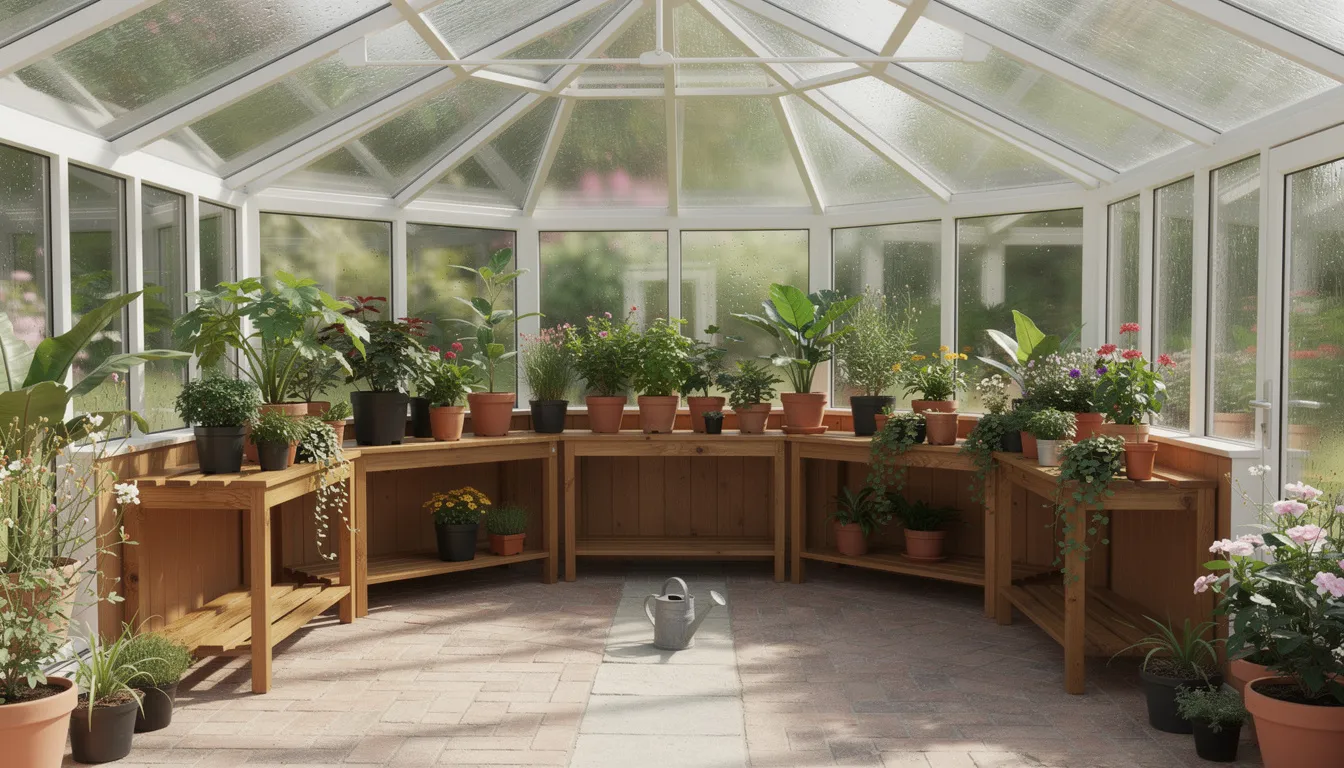
Quality octagonal greenhouses include or offer optional cedar or aluminium staging that wraps around multiple bays, making efficient use of the angled interior. Check how much bench space comes as standard versus what costs extra. Some models include black powder-coated benches fitted to the octagon’s facets.
Consider adding a cedar cold frame or i cedar cold frame outside the greenhouse for hardening off seedlings before planting out.
Aesthetic Details
Higher-end models feature factory-stained timber in natural or light oak tones, colour-matched powder coated finish on cappings, and optional crestings or decorative ridge pieces. These details elevate the greenhouse from functional structure to genuine garden architecture. A slightly textured finish on frames can reduce glare and add visual interest.
Ventilation, Heating and Growing Conditions
The octagonal shape naturally encourages healthy air flow as warm air rises to the central peak and exits through roof vents, drawing cooler air in at lower levels. However, controlled ventilation remains critical for preventing overheating in summer and reducing humidity that promotes fungal diseases.
Roof Vents
Expect at least one opening roof vent with an autovent opener on compact 6ft 6” models. Larger 9×9 designs typically include multiple roof vents positioned around the octagonal roof, plus circular or permanent trickle ventilation in some cases. Check the number and position of vents before buying—inadequate ventilation limits what you can grow successfully.
Side Ventilation
Side louvre vents come as standard or optional upgrades on some aluminium octagonal greenhouses. These draw cool air in at low level while hot air escapes above, creating effective through-flow. This stack effect provides passive convection cooling without requiring electric fans.
Heating Options
For year-round growing or overwintering tender plants, consider:
- Electric heaters – convenient if power is available; electric heaters require a nearby outdoor socket or professional installation. For additional protected storage or workspace, explore metal sheds as affordable and durable options.
- Propane gas heaters – useful where electricity isn’t practical; propane gas heaters produce some moisture as a by-product
- Bubble wrap insulation attached to glazing bars for temporary winter protection
- Creating a smaller warm room within the greenhouse using internal screens
Dwarf walls improve thermal performance by replacing glass at ground level with solid brick or timber panels, reducing heat loss. Dwarf walls also provide a ledge for staging.
Managing Light and Shade
Shading options include internal blinds, external shade netting, or greenhouse shading paint for hot spells. Group plants according to light requirements:
- South-facing bays: tomatoes, peppers, aubergines, and cucumbers
- Northern or shaded bays: ferns, hostas, and shade-tolerant houseplants
For secure and convenient storage of your gardening tools and supplies, consider buying a quality garden shed to keep your space organized.
A solar powered irrigation system can automate watering during hot weather or holidays.
Foundation, Base Plinths and Installation
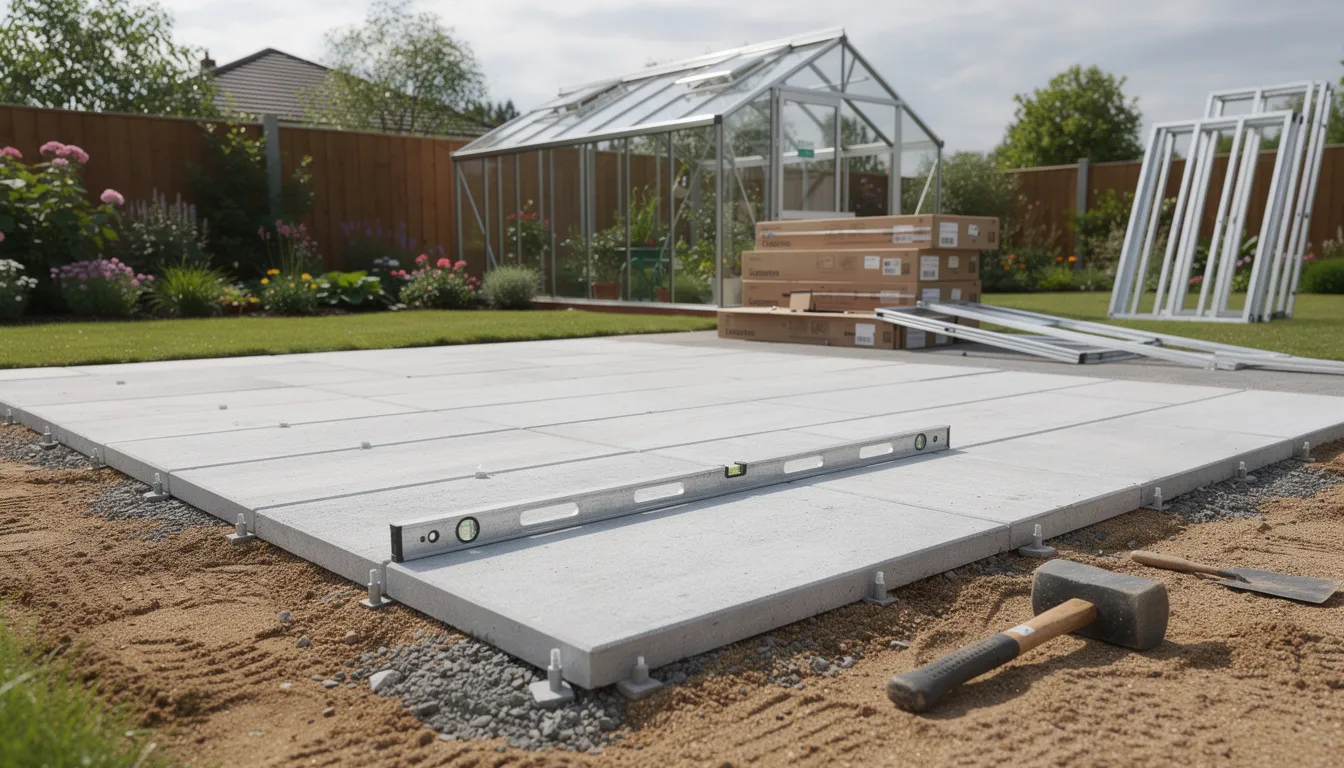
Even though many octagonal greenhouses ship with structural sills or base plinths, they still require a firm, level, and well-drained surface beneath.
Base Plinth Function
A steel or aluminium base plinth (sometimes called a perimeter base) spreads structural loads evenly, keeps timber off the ground to prevent rot, and simplifies installation. Perimeter base features include pre-drilled fixing points and levelling adjustments.
Suitable surfaces for installation include:
| Surface Type | Suitability | Notes |
|---|---|---|
| Concrete paving slabs | Excellent | Level and durable |
| Pressed concrete slabs | Excellent | Good value option |
| Poured concrete pad | Excellent | Permanent solution |
| Gravel or pea shingle over hardcore | Good | Needs compacting and levelling |
| Compacted hardcore with eco grid base kits | Good | Allows drainage |
| Existing hard surface (patio) | Good | Check levels carefully |
| Decking | Possible | Check load-bearing capacity |
For heavier cedar or hybrid models, a level perimeter footing of concrete or 450mm concrete or paving slabs provides the most stable foundation. Follow the manufacturer’s correct external wall sizes rather than roof overhang dimensions when preparing your base.
DIY vs Professional Installation
Premium cedar octagonal greenhouses from some suppliers include professional installation in the price. Others offer supply-only or diy self assembly kits. Installing an octagonal greenhouse demands more precision than a rectangular structure due to the complex angles—if you’re uncertain, professional installation is worth the extra cost.
When planning your base, consider eco paving base kits, recycled plastic base kits, or eco grid plastic bases for an environmentally friendly option. Laying eco paving directly onto compacted ground with a weed control membrane beneath works well for durable eco paving footpath access around the structure.
Access Space
Allow at least 18” (approximately 45cm) of clear access around the greenhouse perimeter. This space proves essential for:
- Installing and replacing glazing panels
- Cleaning gutters and downpipes
- Painting or treating external timber
- General maintenance
Shedsdirect.co.uk product listings highlight whether installation is included, supply-only, and what base requirements apply for each model.
Choosing the Best Location in a UK Garden
Greenhouse location significantly influences light levels, internal temperature, and how often you’ll actually use the structure throughout the year.
Light and Shelter
Select a sunny position, ideally receiving direct sunlight for most of the day. Avoid:
- Overhanging trees that cast shade and drop debris
- Nearby buildings that block morning or evening sun
- Tall fences that create cold shadows in winter
Some shelter from strong winds helps, but don’t sacrifice too much light for protection. The octagonal shape handles wind better than flat-walled structures, with angled sides deflecting gusts effectively.
Services and Access
Consider proximity to:
- Water supply – running a hose becomes tedious; a nearby tap or installed water butt makes life easier
- Power source – necessary if you plan electric heaters, grow lights, or a fed irrigation system
- The house – closer is better for winter access and security
Keep paths clear between the greenhouse and your home. A durable floor kit or durable eco grid path prevents muddy trips during wet weather. Recycled polypropylene pavers or eco paving kits create stable, permeable pathways.
Wind Exposure
In coastal or elevated parts of the UK, check wind exposure carefully. Orient the door away from prevailing winds where possible. The existing wall of a house or outbuilding can provide valuable shelter without blocking light if positioned correctly.
Planning Permission
Most small to medium octagonal greenhouses fall within permitted development rights for UK homes, meaning no planning application is required. However, buyers should check local authority guidance if:
- The property lies within a conservation area
- The building is listed
- The greenhouse is unusually tall
- Installation is close to a boundary
An Oxfordshire project mentioned in horticultural design literature required formal planning permission due to the greenhouse’s visual prominence in a walled kitchen garden.
Common Sizes, Prices and What to Budget For
Octagonal greenhouses represent a premium choice compared with basic rectangular models. The complex frame geometry and precise glazing cuts increase manufacturing costs, but the result is a genuinely distinctive garden building.
Typical Octagonal Building Sizes
| Size Category | Approximate Dimensions | Best For |
|---|---|---|
| Compact | 6ft 6” x 6ft 6” (2.0m) | Small gardens, starter greenhouses |
| Mid-size | 8ft x 8ft (2.4m) | Average gardens, serious growing |
| Large | 9ft x 9ft (2.7m+) | Larger gardens, dual-purpose use |
Measurements are usually quoted as “width x depth” as if describing a rectangle, excluding roof overhang. Check the correct external wall sizes when planning your foundation.
UK Greenhouse Prices
Expect to budget approximately:
| Type | Price Range | What’s Included |
|---|---|---|
| Smaller aluminium/polycarbonate | £1,500–£2,000 | Basic frame, polycarbonate or glass, supply only |
| Mid-range toughened glass aluminium | £2,000–£3,000 | Powder coated frame, toughened safety glass, some staging |
| Premium cedar/hybrid with installation | £3,000–£4,500+ | Handcrafted cedar frame, full glazing, professional fitting |
Additional Costs
Don’t forget to budget for:
- Base preparation (concrete, slabs, or eco paving internal floor options)
- Optional installation if not included
- Staging and shelving upgrades
- Automatic vent openers
- Guttering and downpipe kits
- Internal electrics or heating
- Provide frost protection with insulation or heaters
Shedsdirect.co.uk allows you to filter octagonal greenhouses by price, size, frame material, and glazing type. This helps match specific budgets and garden footprints without endless searching across multiple websites.
How Shedsdirect.co.uk Helps You Compare Octagonal Greenhouses
Shedsdirect.co.uk is a specialist comparison website for garden buildings, covering everything from wooden sheds and log cabins to summer houses, pergolas, and greenhouses. The site fully covers greenhouses from compact cold frames to large freestanding greenhouse structures.
Compare Multiple Suppliers
Browse octagonal greenhouse options from various UK suppliers on a single page. Each listing displays:
- Frame material (cedar, aluminium, hybrid)
- Glazing type (horticultural, toughened, polycarbonate)
- Dimensions and octagonal building sizes
- Warranty length
- Estimated delivery times
- Whether pressure-treated timber applies (for associated structures)
Clear Product Information
Product listings include:
- Precise external wall dimensions
- Base requirements (type and size)
- Whether a structural sill or separate base plinth is needed
- Installation included or supply-only
- Free UK mainland delivery availability
Hexagonal greenhouses are also available for comparison if you’re weighing up six-sided versus eight-sided designs.
Coordinated Garden Buildings
Use Shedsdirect.co.uk to choose an octagonal greenhouse that complements existing garden buildings. Matching styles across pergolas, gazebos, storage sheds, and greenhouses creates a cohesive look. Pressure-treated wooden sheds from the same browse session can share similar design language with your chosen greenhouse.
FAQ
Do I need planning permission for an octagonal greenhouse in the UK?
In most cases, domestic greenhouses (including octagonal designs) are allowed under permitted development rights. This applies provided the greenhouse is for personal use, not positioned forward of the principal elevation of your house, and stays within height and boundary limits.
However, check current Planning Portal guidance and contact your local planning department if the property is in a conservation area, is a listed building, or if the greenhouse is unusually tall or positioned close to a boundary. Requirements vary, and it’s better to confirm before ordering.
How long will a cedar octagonal greenhouse last?
Well-built Western Red Cedar octagonal greenhouses, installed on a suitable base plinth and maintained with occasional re-staining or oiling, can last 20–30 years or more in typical UK conditions. The timber’s natural resistance to decay and insects helps enormously.
Key factors for longevity include keeping timber off damp ground via a proper base, ensuring good ventilation to prevent condensation damage, and addressing any rot spots promptly if they appear. A flat and level underside on the base prevents water pooling.
Can I use an octagonal greenhouse as a garden room or office?
Many owners use octagonal greenhouses as informal garden rooms for seating, relaxing, and enjoying garden views—especially when fitted with decorative flooring and power for lighting. The glazed walls create a bright, pleasant space that feels connected to the outdoors.
For serious year-round office use, however, a fully insulated garden room or garden office is usually more appropriate. Greenhouses absorb warmth quickly but also lose it rapidly. Without proper insulation, heating costs would be substantial in winter. Shedsdirect.co.uk compares purpose-built garden offices alongside greenhouses for this reason.
What is the difference between an octagonal greenhouse and a hexagonal greenhouse?
An octagonal greenhouse has eight sides, creating a more rounded, pavilion-like interior. Hexagonal greenhouses have six sides and a slightly more angular appearance. Both designs provide excellent light from multiple directions.
The choice often comes down to available space, style preference, and the specific models and prices available. An octagonal provides marginally more floor area for a given diameter (approximately 25 square metres for a 6m-diameter octagon versus 19 for a hexagon of similar size). Compare both options on Shedsdirect.co.uk to see what suits your garden.
How soon can an octagonal greenhouse be delivered and installed?
Lead times vary by manufacturer, size, and season. Many UK suppliers quote delivery within a few weeks during quieter winter months, extending to several months during peak spring and early summer ordering periods.
Check each product listing on Shedsdirect.co.uk for up-to-date delivery estimates. Listings also clarify whether installation is included in the price or available as an optional extra. Ordering early—particularly for spring installation—helps avoid disappointment.
