
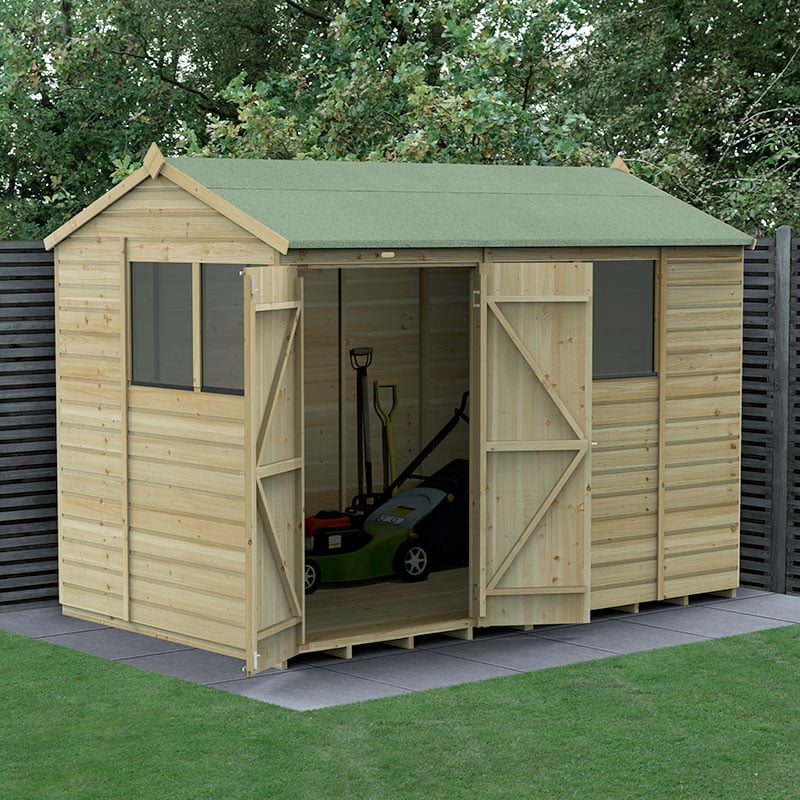
Choosing between shiplap and overlap cladding is one of the most important decisions when buying a wooden shed in the UK. Both types look similar at first glance, but they perform very differently over time, especially in the wet British climate.
This guide breaks down exactly what separates shiplap from overlap, which situations each suits, and how to decide which is right for your shed, garden, and budget.
What Is Overlap Cladding?
Overlap cladding uses flat horizontal boards fixed to the shed frame, with each board overlapping the one below by a set amount, typically 10 to 15mm. The profile is simple, and the boards are relatively thin, usually around 8 to 10mm.
This method is cost-effective to produce and perfectly functional for basic garden storage. The overlapping arrangement channels water downwards and off the structure, providing reasonable weather protection when the shed is properly treated and maintained.
The limitation of overlap cladding is that gaps can develop between boards as the timber naturally expands and contracts with temperature and moisture changes. Over time this can allow water ingress, particularly on sheds exposed to driving rain from the west or in coastal locations.
What Is Shiplap Cladding?
Shiplap cladding uses boards machined with a tongue-and-groove profile. Each board slots into the one below it, creating a tight interlocking joint rather than a simple overlap. Most shiplap used on quality sheds is 12mm thick, making it considerably more solid than standard overlap boards.
The interlocking profile eliminates gaps more effectively, creating a weathertight barrier that maintains its integrity even as the timber moves. The scalloped or rebated profile also improves rainwater runoff, channelling water away from the joint rather than allowing it to sit and penetrate.
Shiplap is the standard cladding type on premium shed brands. The Forest Beckwood range uses 12mm shiplap tongue-and-groove throughout, combined with pressure treatment for a genuinely long-lasting structure.
Shiplap vs Overlap: Head-to-Head Comparison
Weatherproofing
Shiplap wins clearly. The interlocking joint resists water penetration far better than simple overlapping boards. For UK gardens that see sustained rainfall across autumn and winter, this is a meaningful practical advantage.
Durability
Shiplap boards are thicker and the joint design distributes structural load more evenly. This makes shiplap sheds more resistant to racking and movement over time. Overlap sheds can develop visible board movement after a few years, particularly in exposed positions.
Appearance
Both look attractive when new. Shiplap tends to retain a cleaner, more uniform appearance as it ages because the interlocking boards move less independently. Overlap sheds can develop a slightly varied surface as boards expand and contract at different rates.
Maintenance
Overlap sheds generally require more frequent treatment because the gaps that develop create entry points for moisture. Shiplap sheds, particularly pressure treated models, need significantly less maintenance. Forest Beckwood shiplap sheds with 25-year pressure treatment require no anti-rot retreating at all.
Price
Overlap sheds are cheaper to produce and cheaper to buy. If budget is the primary concern and you are happy to maintain the shed annually, overlap represents good value for basic storage needs.
Shiplap sheds cost more upfront but deliver better long-term value through reduced maintenance costs and greater longevity. The Forest 4Life range bridges the gap with overlap cladding combined with pressure treatment, offering a mid-point option worth considering.
When to Choose Overlap Cladding
Overlap sheds make sense in specific situations. If your shed will be in a sheltered position, if you are comfortable with annual treatment, and if your primary use is simple tool storage rather than a workshop or hobby space, overlap is a perfectly sound choice.
Overlap is also the right call when budget is tight and the shed is intended as a temporary or short-term structure. For a rental property garden or a transitional storage solution, the lower upfront cost makes sense.
When to Choose Shiplap Cladding
Shiplap cladding is the right choice when you want a shed that performs well in exposed positions, requires minimal maintenance, and is built to last a decade or more without significant intervention.
For workshop use, hobby rooms, bike storage, or any application where you will spend time inside the shed, shiplap provides a noticeably more solid feel and better insulation potential thanks to the thicker boards and tighter joints.
If you are buying a large shed where retreating large volumes of timber would be a significant annual task, shiplap combined with pressure treatment removes that burden entirely. See our full wooden sheds range for shiplap options across all sizes.
Does Cladding Type Affect Planning Permission?
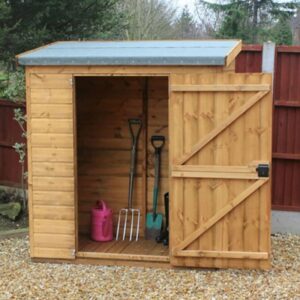
No. Planning permission for garden sheds in the UK is determined by shed size, height, position, and location rather than cladding material. Both shiplap and overlap sheds fall under the same permitted development rules. Always check with your local planning authority if you are unsure about your specific circumstances.
Frequently Asked Questions
Is shiplap always better than overlap?
For long-term performance and weatherproofing, yes. But if budget is the priority and the shed will be well-maintained in a sheltered position, overlap is a perfectly practical choice for basic storage.
Can I upgrade overlap cladding on an existing shed?
Replacing cladding on an existing shed is a significant undertaking and generally not cost-effective. It is usually better to maintain overlap cladding well or factor the cladding upgrade into the cost of a new shed purchase.
Does shiplap cladding need treating?
Untreated shiplap cladding needs annual treatment just like overlap. The real advantage comes when shiplap is combined with pressure treatment, as on Forest Beckwood models, which carry a 25-year anti-rot guarantee and require no further treatment.
What thickness of shiplap should I look for?
12mm shiplap is the quality benchmark for garden sheds. Anything thinner starts to behave more like overlap in terms of rigidity. Some budget shiplap sheds use thinner boards, so always check the specification before buying.
Making Your Decision
The shiplap vs overlap debate comes down to budget versus long-term value. Overlap works fine for basic, well-maintained storage sheds. Shiplap, particularly combined with pressure treatment, is the sensible choice for anyone who wants a shed that performs well in British weather without constant attention.
Browse the full wooden garden sheds range at Sheds Direct to compare both cladding types side by side and find the right specification for your garden.
