

Wooden sheds remain the most popular choice for UK gardens, and it is easy to see why. They look great, perform well in British weather when properly specified, and offer flexibility that metal and plastic sheds simply cannot match. But with hundreds of options available, knowing where to start can feel overwhelming.
This complete wooden sheds guide covers every decision you will need to make, from size and cladding through to bases, treatment, and assembly. Whether you are buying your first shed or replacing an old one, this guide gives you a clear framework for making the right choice.
Choosing the Right Size Wooden Shed
Size is the most fundamental decision. The most common mistake is buying a shed that is slightly too small, then spending the next few years frustrated by the lack of space. Before measuring your garden, list everything you plan to store and measure the largest items.
As a rough guide: a 6×4 shed suits basic tool storage for a small garden; an 8×6 is the most popular all-round size, offering room for tools, bikes, and a small workbench; a 10×8 opens up proper workshop potential; and anything 12-foot-plus is for serious storage or multi-purpose use.
Also consider the shed footprint relative to your garden. Permitted development rules allow sheds up to 2.5m to the eaves without planning permission in most cases, and ground coverage should not exceed 50% of the total garden area. Always leave clearance around the shed for maintenance access.
Understanding Wooden Shed Cladding Types
Cladding is the external wall boarding and comes in three main types: overlap, shiplap, and tongue-and-groove.
Overlap cladding uses flat horizontal boards fixed with each one overlapping the board below. It is cost-effective and perfectly adequate for basic storage when maintained properly. Boards are typically 8 to 10mm thick.
Shiplap uses a machined tongue-and-groove profile that interlocks tightly between boards. The result is a more weathertight, solid structure. Most quality shiplap cladding is 12mm thick. This is the standard on premium ranges like Forest Beckwood and many Shire models.
For a direct size and cladding comparison, look at the Forest 4Life 8×6 overlap pressure treated apex shed alongside shiplap alternatives in the same size range.
Roof Styles Explained
There are three main roof styles on wooden sheds sold in the UK.
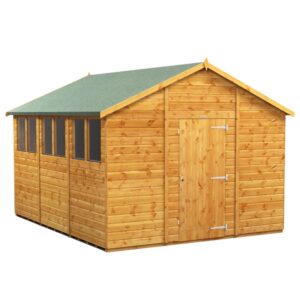
Apex roofs have a central ridge with equal slopes either side, creating the classic triangular shed profile. They maximise headroom in the centre of the shed and handle rain runoff efficiently from both sides. Apex roofs are the most popular choice for workshop and general-use sheds.
Pent roofs slope from front to back in a single plane. They have a lower profile and are well suited to positions against walls or fences. Headroom at the rear is reduced, which works fine for storage but can feel restrictive in a working shed.
Reverse apex roofs position the ridge along the length of the building rather than the width. This means double doors can be positioned on the gable end, giving wider access. This style is popular for bike storage and equipment sheds where straight-in access is important.
Timber Treatment and Guarantees
Treatment is what determines how long your wooden shed lasts. There are two main approaches.
Dip treated sheds have the timber soaked in preservative during manufacture. This offers baseline protection but requires annual retreating to maintain the defence against rot and fungal growth. Most budget sheds use dip treatment.
Pressure treated sheds force preservative deep into the timber fibres under pressure. This creates lasting protection from the inside out and typically comes with a 10 to 25-year anti-rot guarantee. Forest Beckwood models carry a 25-year guarantee and require no further anti-rot treatment, making them a strong value proposition over their lifetime.
If you do not want to maintain your shed annually, pressure treatment is not optional. See the Forest Beckwood 10×6 shiplap pressure treated pent shed for an example of what a long-guarantee specification looks like in practice.
Frames and Floors
The frame is the skeleton of the shed. Thicker framing means a stronger, more rigid structure. Standard sheds use 28mm x 38mm framing, while premium models step up to 28mm x 56mm or even heavier sections. The Forest Beckwood range uses 30% thicker framing than standard wooden sheds, contributing to its strength and modular panel system.
Shed floors are typically solid sheet (OSB) or tongue-and-groove timber. Tongue-and-groove floors are more durable, handle footfall better, and resist moisture more effectively. For workshop use or anywhere you will be moving heavy items, tongue-and-groove is worth the modest additional cost.

Do You Need a Base?
Yes, without exception. A wooden shed installed without a proper base will suffer from damp, warping, and structural problems within months. Most manufacturer warranties are also voided if the shed is not installed on an appropriate base.
Concrete is the most robust option and is recommended for sheds 8×6 and above. It provides excellent load distribution, pest resistance, and long-term stability. Paving slabs on a compacted sand and hardcore sub-base are a practical alternative for smaller sheds or where concrete is not practical.
Whatever base type you use, it must be level, extend slightly beyond the shed footprint, and drain effectively. A base that pools water is worse than no base at all.
Windows and Doors
Windows bring natural light into the shed, which matters most for hobby and workshop use. Standard windows are fixed single-pane styrene, while quality models offer opening windows for ventilation. If you plan to work inside the shed regularly, prioritise natural light by choosing a model with generous window coverage or position the shed with windows facing south or west.
Single doors are standard on smaller sheds. Double doors allow easier access for bikes, mowers, and large equipment and are worth prioritising on sheds 8×6 and above. Some models, particularly reverse apex designs, position double doors on the gable end for the widest possible opening.
Assembly and Delivery
Most wooden sheds arrive as flat-pack kits. Smaller sheds can typically be assembled by two people in a day. Larger sheds, particularly 10-foot-plus models, benefit from three people and should be planned for a full weekend.
Read instructions completely before starting. Check all components against the parts list. Ensure the base is level before placing any panels. Work systematically and do not rush the squaring process at any stage, as errors early on compound as you build upward.
Delivery is typically kerbside, so plan how you will move sections to the installation point. Most UK deliveries are free to mainland addresses. Check your specific postcode when ordering as remote or island addresses may attract a surcharge.
Frequently Asked Questions
How long do wooden sheds last?
A pressure treated wooden shed maintained in reasonable condition will typically last 15 to 30 years. Dip treated sheds last 10 to 15 years with regular maintenance. The base quality, treatment level, and annual care are the key factors.
Do wooden sheds need planning permission?
Most wooden garden sheds fall within permitted development rights and do not require planning permission. The main constraints are height (2.5m maximum to the eaves), position (not forward of the house’s principal elevation), and ground coverage (no more than 50% of garden area). Check with your local authority if you are near boundaries or in a conservation area.
What is the best wooden shed for a small garden?
A 6×4 or 6×3 pent shed typically suits small gardens best. The lower pent roof profile reduces visual impact, and the rectangular footprint fits neatly against fences or walls. See our small wooden sheds range for compact options with pressure treatment.
Can wooden sheds be used as garden offices?
Yes, with the right specification. Shiplap cladding, solid framing, and insulation make wooden sheds practical garden offices. You will need to add insulation to walls, floor, and roof, plus suitable power supply. Larger sheds from 10×8 upwards provide enough space to work comfortably.
What maintenance does a wooden shed need?
Dip treated sheds need annual treatment with a quality wood preservative. Pressure treated sheds need no anti-rot retreating but benefit from an annual inspection for damage, a clean roof, and prompt repair of any broken components. Clear gutters and downpipes if fitted, and ensure the area around the base remains well drained.
Browse Our Full Range
Now you know what to look for, you are ready to find the right wooden shed for your garden. Whether you need a compact storage solution or a large workshop-ready building, the right specification makes all the difference.
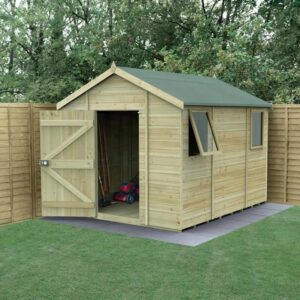
Browse the full wooden garden sheds range at Sheds Direct, or explore premium pressure treated options like the Forest 4Life 8×6 double door apex shed with four windows to see what a well-specified mid-range shed looks like.
