

21%

21%

21%

20%

Metal shed condensation is one of the most common problems UK homeowners face, particularly during our damp winter months. If you’ve noticed water droplets forming inside your metal shed, or found your stored items getting damp despite keeping the door closed, you’re dealing with condensation. This moisture build-up occurs when warm, humid air meets the cold metal surfaces of your shed walls and roof. Fortunately, metal shed condensation in the UK is entirely preventable with the right approach. From improving ventilation to adding insulation and using anti-condensation products, there are several effective solutions that will keep your shed dry and your belongings protected year-round.
Why Do Metal Sheds Get Condensation?
Metal shed condensation happens due to basic physics — when warm, moisture-laden air comes into contact with cold metal surfaces, the water vapour condenses into liquid droplets. This is particularly problematic in the UK climate, where we experience frequent temperature fluctuations and high humidity levels.
Metal conducts heat much more readily than wood or plastic, making metal sheds especially susceptible to condensation. During the day, your shed warms up from sunlight, but at night or during cooler weather, the metal walls and roof cool down rapidly. Any moisture in the air — whether from rain, breathing, wet tools, or even plants stored inside — will condense on these cold surfaces.
For comprehensive guidance on metal shed ownership, check out our detailed metal sheds guide which covers all the essential considerations for UK buyers.
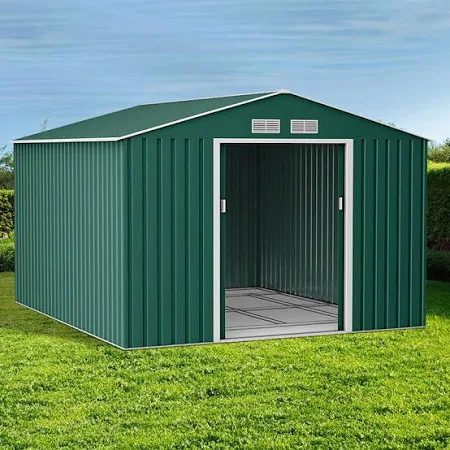
Is Condensation Damaging Your Metal Shed?
While condensation itself won’t directly damage a well-made metal shed, the persistent moisture it creates can lead to several serious problems. The most obvious concern is rust formation, particularly around joints, screws, and any areas where the protective coating might be compromised.
More immediately, condensation will damage anything you store inside. Tools can rust, cardboard boxes will deteriorate, and fabric items may develop mould or mildew. Wooden items like garden furniture or shelving can warp, rot, or become breeding grounds for fungus.
The constant moisture also creates an ideal environment for mould and algae growth inside your shed. This not only looks unsightly but can create health issues and unpleasant odours. If you’re concerned about rust specifically, our guide on whether metal sheds rust in the UK provides detailed information on prevention and treatment.
How to Prevent Condensation in a Metal Shed
Preventing metal shed condensation requires a multi-faceted approach focusing on temperature control, moisture reduction, and air circulation. The key is breaking the cycle that creates condensation in the first place.
Start by ensuring your shed is properly positioned with good drainage around the base. Water pooling near your shed increases local humidity and makes condensation worse. Keep gutters clear and ensure rainwater flows away from the building.
Inside your shed, avoid storing wet items. Let tools dry thoroughly before putting them away, and never store damp clothing, wet plant pots, or recently washed items. Consider using moisture-absorbing products like silica gel packets or dehumidifying crystals in enclosed storage boxes.
Regular maintenance is crucial too. Check for and seal any gaps in walls or around the door that might let in moisture. However, don’t seal your shed completely — you need controlled ventilation to prevent condensation.

The Role of Ventilation in Metal Sheds
Proper ventilation is absolutely critical for preventing condensation in metal sheds. Good airflow helps equalise temperature and humidity levels inside and outside your shed, reducing the conditions that cause condensation to form.
Most quality metal shed manufacturers like Asgard and Yardmaster include ventilation features, but you may need to add more depending on your local climate and what you store. The principle is simple: you need air intake low down and air extraction higher up to create natural air circulation.
Install louvre vents or ventilation grilles near the floor on one side of your shed, and higher up on the opposite side. This creates a natural airflow as warm air rises and escapes through the higher vents, drawing fresh air in through the lower ones. For larger sheds, consider multiple vents or even a small solar-powered extractor fan.
Don’t worry about security — modern ventilation products are designed to keep out pests and weather while allowing airflow. Ridge vents along the roof line are particularly effective and less obvious to potential intruders.
Best Anti-Condensation Products for Metal Sheds
Several products are specifically designed to combat metal shed condensation, offering different approaches depending on your budget and shed size. Anti-condensation paint is one of the most popular solutions, creating a textured surface that absorbs and releases moisture gradually rather than allowing it to form droplets.
Brands like Trimetals often recommend specific anti-condensation treatments for their sheds. These coatings typically contain fibres that hold moisture until air circulation can evaporate it safely. Apply these paints to the interior walls and ceiling for best results.
Desiccant dehumidifiers are excellent for smaller sheds or specific storage areas within larger buildings. These don’t require electricity and can be recharged by drying in a warm oven. For larger sheds with power supply, electric dehumidifiers offer more consistent moisture control.
Vapour barriers — plastic sheeting designed to prevent moisture movement — can be effective when properly installed. However, they must be combined with adequate ventilation to prevent trapping moisture in the wrong places.

How to Insulate a Metal Shed to Reduce Condensation
Insulation helps prevent condensation by reducing the temperature difference between inside and outside surfaces. When done correctly, insulation keeps interior surfaces warmer, making condensation less likely to form.
Bubble wrap insulation is a popular DIY option that’s relatively inexpensive and easy to install. Cut it to fit between wall panels or roof sections, securing with double-sided tape or staples. While not as effective as professional insulation, it makes a noticeable difference.
For a more permanent solution, consider rigid foam boards or mineral wool insulation. These require more work to install properly but provide better thermal performance. Always ensure any insulation is suitable for the potentially damp environment of an unheated shed.
Remember that insulation alone won’t solve condensation problems — it must be combined with adequate ventilation. The goal is controlling moisture, not completely sealing your shed. Quality metal sheds from manufacturers like Globel are designed to work with insulation systems while maintaining necessary airflow.
Frequently Asked Questions
Should I heat my metal shed to prevent condensation?
Heating can help, but only if done properly with adequate ventilation. A small electric heater or greenhouse heater can reduce condensation by keeping surfaces warmer, but without ventilation, you’ll just create more humid air that will condense elsewhere. Heating works best as part of a comprehensive moisture control strategy.
Will painting the inside of my metal shed stop condensation?
Regular paint won’t stop condensation, but anti-condensation paint can significantly reduce the problem. These special paints contain absorbent fibres that hold moisture temporarily, allowing it to evaporate gradually rather than forming droplets. They’re most effective when combined with good ventilation.
How much ventilation does my metal shed need?
As a general rule, you need ventilation equivalent to about 1/150th of your floor area. For example, a 6×4 foot shed (24 square feet) needs roughly 0.16 square feet of ventilation — about two 4-inch diameter vents. Always provide both high and low vents for proper air circulation.
Do expensive metal sheds get less condensation?
Higher quality metal sheds often have better design features like integrated ventilation, superior sealing, and anti-condensation treatments. However, even the best sheds can develop condensation problems if not properly ventilated. Our article on how long metal sheds last in the UK explains why investing in quality construction pays off over time.
Ready to Buy a Metal Shed?
Now that you understand how to prevent and manage condensation, you’re ready to choose a metal shed that will serve you well for years to come. Browse our full range of metal garden sheds to find the perfect solution for your garden, complete with all the features you need to keep condensation at bay.
